
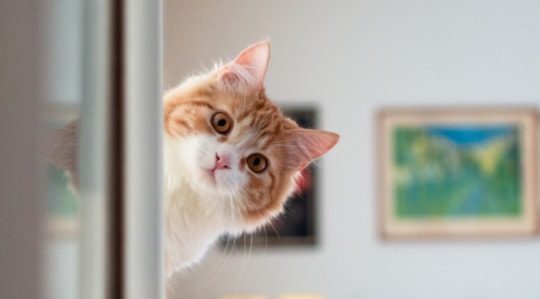
Why Does My Cat Stare at Me? 7 Reasons and What They Mean
In the case of cats, a stare is worth a thousand words. When your cat gazes at you with those expressive eyes, they can communicate all kinds of emotions and needs! They might be showing affection, requesting food, vying for attention, or letting you know they don’t feel well.
In this guide, we cover the most common reasons cats stare, what their body language reveals, and how to respond in a way that strengthens your loving bond.
Key Takeaways
- Your cat may stare at you to communicate affection, hunger, curiosity, playfulness, fear, overstimulation, discomfort, or a need for attention.
- Context and body language determine the meaning behind every one of your cat’s stares.
- Try to match your cat’s energy when they stare, like slowly blinking back for affection or giving them space if they seem tense.
- If your cat is staring with a stiff posture, dilated pupils, or while hiding, they may be afraid or in pain.
- Call your veterinarian if you notice new or persistent staring in your senior cat; they might be experiencing cognitive changes.
Understanding Why Cats Stare
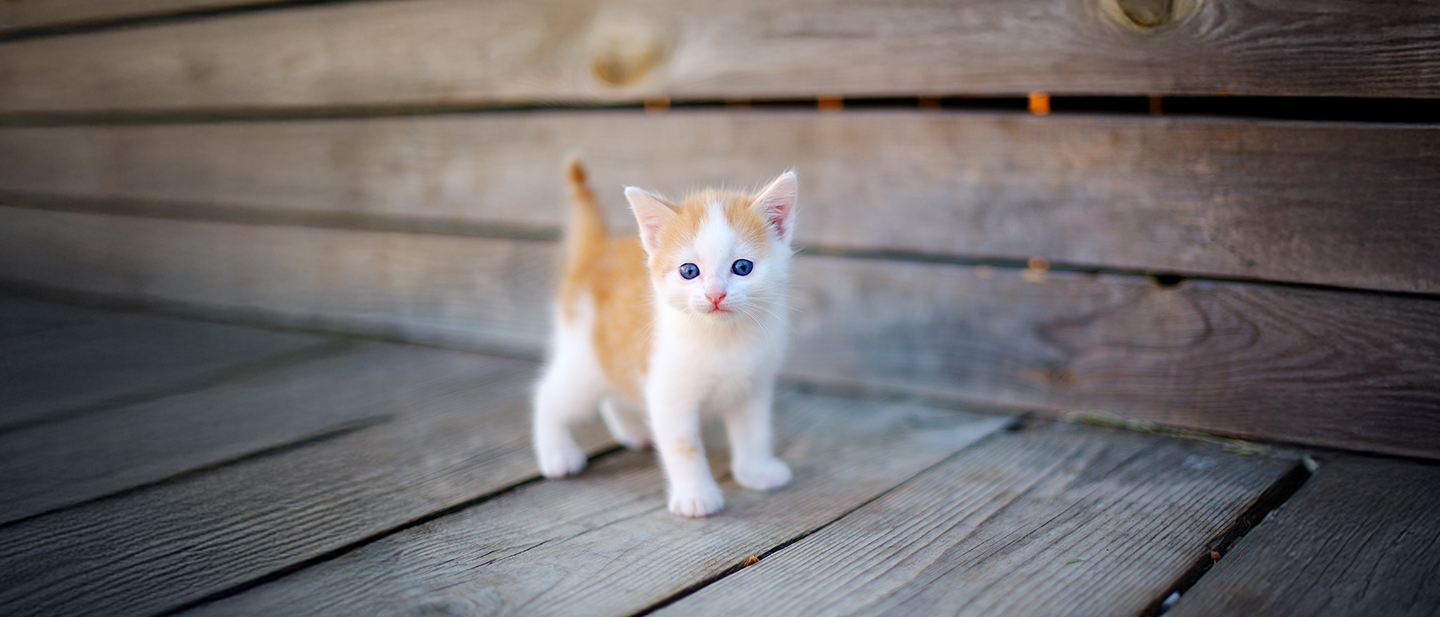
Your cat relies on observation skills to assess their environment. They may pick up on a movement that means danger, or they may notice something that piques their curiosity.
But beyond studying the world around them, cats also stare when they want to communicate with you!
By staring, they might be telling you they need attention or, on the other hand, they need more space. They might stare to ask you the classic question: Will you feed me?
Because your cat’s stare can mean so many different things, you also need to look at their body language to understand exactly what they’re trying to say. Do they look relaxed? This means they’re content. Do they look tense? This can signal anxiety.
Let’s take a closer look at some of the reasons your cat won’t take their eyes off you.
7 Reasons Your Cat Stares at You
Table of Contents
1) Showing Affection
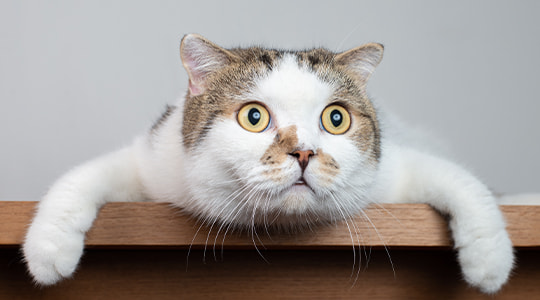
If your cat’s gaze is soft and accompanied by slow, deliberate blinks (sometimes called “slow-blinking”), they’re letting you know they trust you. They might follow that gaze by sitting beside you and purring or kneading.
2) Wants Food or a Treat
Staring can be a learned cat behavior. So, if you’ve established a set meal time, they may stare at you in anticipation of their food.
Don’t be surprised if your cat’s staring intensifies when they’re about to eat. And watch for meowing, leg rubbing, and walking toward their bowl.
3) Seeking Attention
Your cat may also stare as a request for playing or petting. This is especially common for indoor cats with limited environmental stimulation. Their eye contact may be accompanied by vocalization, following you, and even blocking doorways, so you pay attention!
4) Curious About Your Activity
You might see your cat watching you closely as you go about your daily activities. They want to make sense of what you’re doing.
This harkens back to when their ancestors needed to pay keen attention to their environment. It was critical to know the difference between “Am I about to become prey?” and “Am I about to catch my next meal?”
5) Inviting Play
A stare accompanied by dilated pupils, a swishing tail, and a crouched posture indicates your cat wants to play. Get ready! They may pounce, bat your feet, or even sprint away, expecting you to chase them.
6) Feeling Scared or Anxious
If your cat’s curiosity leads them to determine they’re facing a (perceived or real) threat, they’ll continue to stay fixated and focused. Loud noises, new visitors or pets, or any sudden change may trigger this behavior.
7) Feeling Agitated or Overstimulated
Finally, if your cat’s body is rigid, their fur is raised, and their stare is hard, they may be warning you they’re feeling overstimulated. Even something as simple as petting them too much can elicit this kind of response.
How to Read Your Cat's Body Language While They Stare
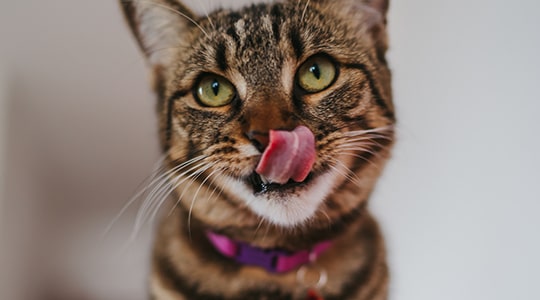
Your cat's stare should always be interpreted alongside their full body language. Combining their stare and their body language allows you to interpret your cat’s needs more accurately:
- Soft eyes, slow blinks, neutral ears, a loose body, and an upright tail indicate relaxation
- Forward ears, wide eyes, a still tail, and their body oriented toward something interesting indicate an alertness and curiosity
- Dilated pupils, flattened ears, a crouched body, and a tucked tail indicate fear
- Stiff posture, lashing tail, raised fur, and ears turned back indicate agitation
Reading the Signals Behind Your Cat's Stare
Use this table as a quick reference to interpret your cat's stare. Don’t forget to take in the full context of the situation before deciding how to respond.
Remember: this table provides general behavioral guidance; your cat may express themselves differently. Always connect with your veterinarian if you notice sudden or consistent changes in your cat's behavior.
Stare Type | Eyes | Ears | Tail | Body | Likely Meaning |
Affectionate | Soft, half closed, slow blinks | Neutral, relaxed | Upright with gentle curve | Loose, may be curled up near you | Trust, love, contentment |
Hungry | Wide, focused on you | Forward, alert | Upright, may twitch | Moving toward food area | Wants food or treats |
Curious | Slightly wide, attentive | Forward, perked | Still or gently swaying | Relaxed but oriented toward activity | Observing your activity |
Playful | Dilated pupils | Forward | Swishing back and forth | Crouched, weight shifting | Inviting you to play |
Fearful | Dilated pupils, wide open | Flattened or pinned back | Tucked close to body | Low, crouched, possibly hiding | Scared, seeking safety |
Agitated | Hard, unblinking | Turned sideways or back | Low, lashing, or puffed | Stiff, rigid, may arch | Warning to back off |
How to Respond When Your Cat Stares at You
Responding to an Affectionate Stare
You know the stare your cat reserves just for you? Try staring lovingly back to strengthen trust. And when they blink slowly at you, do the same to them.
Fun fact: In a 2020 study at the University of Sussex, researchers found that when cat owners slow-blink first, their cat actually responds by slow-blinking back.
If your cat is close by and seems relaxed, you might also want to gently pet them. Speaking softly will reinforce that relaxation and keep the energy between you calm and positive.
Responding to a Hungry or Attention-Seeking Stare
If your cat is giving you that “feed me” stare, check the clock. Is it time to eat? If it isn’t, offer them a treat, as long as it fits into their daily calorie intake.
If it’s not meal time, your cat might be craving attention. See if they want to play, or maybe they want some contact.
Responding to a Fearful or Aggressive Stare
If you’ve determined that your cat’s stare is telling you they’re feeling afraid or defensive, it’s not the time to return their look! Direct eye contact can sometimes escalate a sense of stress.
Instead, turn away and step back to give your cat some space. If you see what’s worrying them, try to remove it.
Why Do Cats Stare in Specific Situations?
Certain situations can cause your cat to stare even more than normal. Or maybe you don’t see anything at all and can’t figure out what’s got your kitty so enthralled! Here are a few examples of those situations and what the reason for your cat’s staring might be.
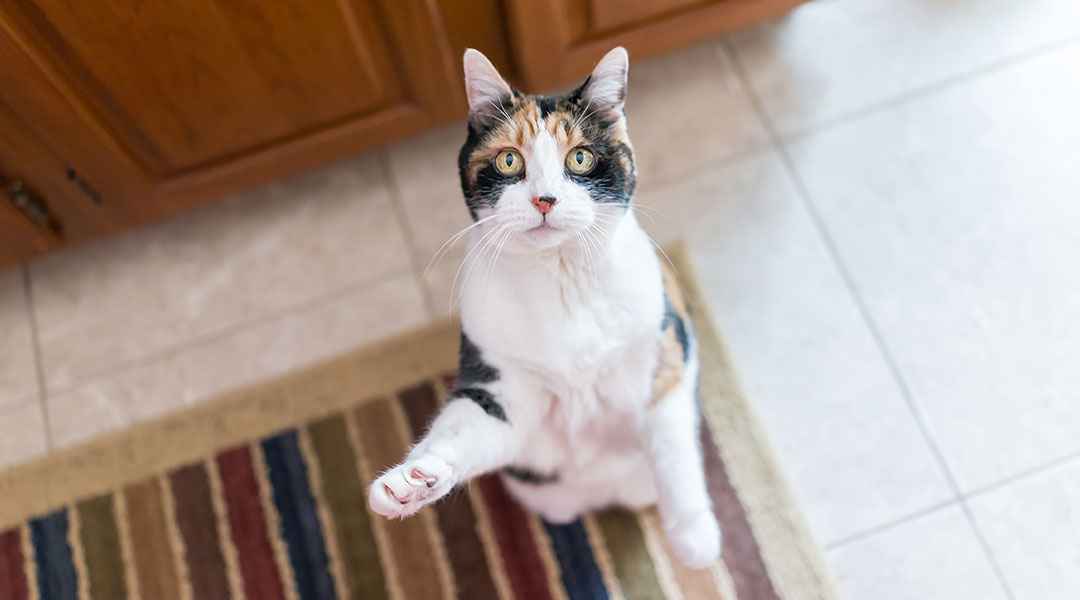
Why Does My Cat Stare at the Wall?
Cats can detect high-frequency sounds we can’t hear, like insects in the wall or air moving through ducts. And their incredible low-light vision allows them to see subtle movements invisible to us.
However, if you notice your cat staring at inanimate objects for prolonged periods of time, they may have an underlying health issue. Monitor their wall-staring habit. If it seems like too much, contact your veterinarian.
Why Does My Cat Stare at Me While I Sleep?
Cats are most active at dawn and dusk, so they might be awake while you’re still asleep.
If you get that sixth-sense feeling and wake up to your cat staring at you, they might be trying to tell you they want breakfast. Or they might want your attention or need you to know they’re uncomfortable.
Why Do Cats Stare at Nothing?
Cats’ eyesight is razor sharp! They notice stimuli and details we miss completely. And because of their wild instincts and natural curiosity, they like to know what’s around them at all times. So, what looks like nothing to you might be something very real to them.
One exception is that some indoor cats get bored and respond by “blank staring.” Increasing your cat’s enrichment activities can perk them up.
When Cat Staring May Signal a Health Concern
Most of the time, your cat’s staring habits are perfectly normal. But you may want to contact your veterinarian if you notice:
- The staring is paired with confusion, vocalization changes, litter box issues, appetite loss, or lethargy
- Your senior cat is increasing their staring sessions, seems disoriented, or has shifted their sleep cycle, indicating they may be experiencing cognitive problems.
- A lot of blank or unresponsive staring, which could mean vision changes.
Strengthen Your Bond with TEMPTATIONS™ Cat Treats
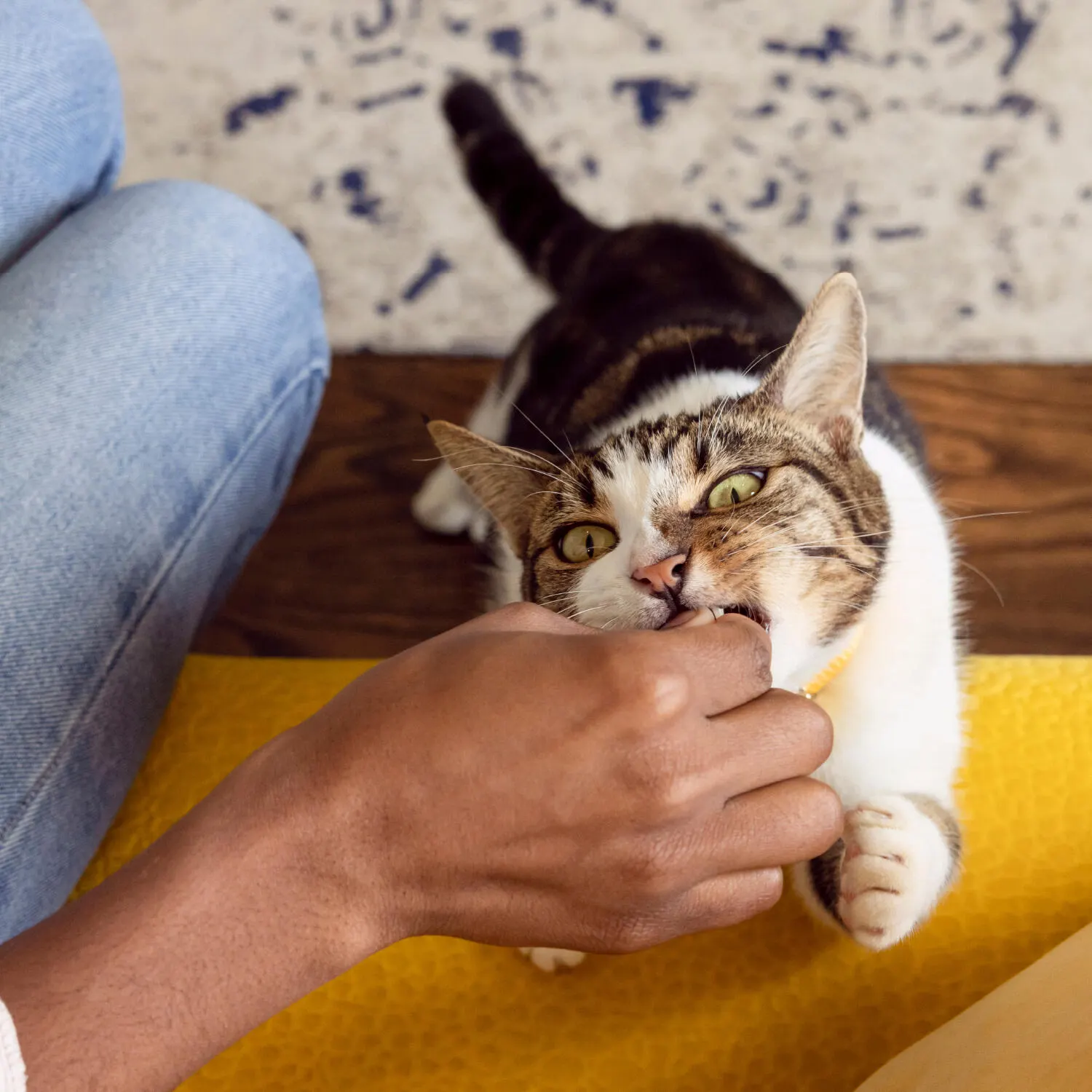
When your cat locks eyes with you, you can be sure they’re trying to tell you something. Giving them a treat lets you tell them something back.
TEMPTATIONS™ Cat Treats are always a great choice! Cats go crazy for the taste. They’re 100% nutritionally complete, enriched with vitamins and minerals, and come in a variety of textures, flavors, and formats.
And for a true bonding experience, try giving your cat TEMPTATIONS™ Lickables Puree Cat Treats and Lickable Spoons Treats. Because they’re interactive, they’re a yummy way for your relationship with your cat to grow.
References
- https://cats.com/why-is-my-cat-staring-at-me
- https://www.cats.org.uk/cats-blog/why-does-my-cat-stare-at-me
- https://vcahospitals.com/resources/behavior-cat/why-do-cats-stare-at-nothing
- https://mvavets.com/blog/why-does-my-cat-stare-at-me/
- https://www.nature.com/articles/s41598-020-73426-0
- https://www.vet.cornell.edu/departments-centers-and-institutes/cornell-feline-health-center/health-information/feline-health-topics/cognitive-dysfunction
- https://www.aspca.org/pet-care/cat-care/common-cat-behavior-issues/aggression-cats
- https://icatcare.org/articles/cat-communication