
5 Tips to Help You Train Your Cat
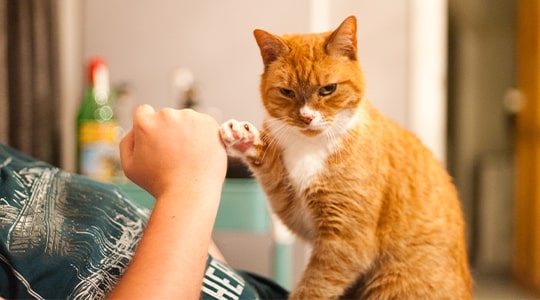
You can teach your cat to sit, high-five, come when they’re called, and even stop scratching the leg of that chair by using positive reinforcement, treats, a clicker, and short, focused lessons.
Cats are perfect candidates for training. They’re smart, independent, and have great memories, especially when you train them in line with their instincts. People constantly think about training their dogs. But why not train your cat?
This guide explains proven techniques for training your cat; how kittens, adult cats, and senior cats differ in their training capacities; and how to know when to end a training session.
Key Takeaways
- Help your cat connect good behavior with rewards using treats and a clicker as positive reinforcement.
- Keep training sessions at five minutes or less to match your cat’s attention span.
- Training builds your cat’s mental stimulation, reduces unwanted behaviors, and strengthens the bond between you.
- It’s easiest to start training a kitten, but adult and senior cats can learn new skills with some patience.
- Punishment is not a recommended training method for any pet and can damage the trust your cat has in you.
Why Train Your Cat?

Table of Contents
Teaching your cat tricks like high-fiving, sitting, walking on a leash, and coming when they’re called is fun for both you and your cat, and it strengthens the bond you have with one another.
It can also help ease the anxiety your cat feels when they see the veterinarian or get groomed, and it can reduce negative behaviors like scratching furniture and counter-surfing.
Training is especially valuable for indoor-only cats because it provides mental stimulation they would otherwise be missing. But all cats can do it! In fact, the AAHA Canine and Feline Behavior Management Guidelines(open in new tab) recommend training for all cats as part of their routine care.
How Long Does It Take to Train a Cat?

Some cats can be trained in just a few days, while others take longer, like a few weeks. Don't worry about speed. Instead, focus on consistency and keep sessions short. Daily sessions that last five minutes or less produce faster results than less frequent, longer ones.
Tips to Help You Train Your Cat

1) Use Treats to Train
Show your cat a treat, and all of a sudden, they’re eager to learn! Do you know your cat’s favorite flavors? Use those as treats as high-value rewards. (Lickable treats are a great option. Cats love them!)
How to Use Treats Effectively
Timing makes a big difference. Reward your cat immediately so they link their behavior to the treat. For ease (and to save money!), keep the treats small or break them into smaller pieces. You’re going to go through a lot of them.
Remember to keep track of the number of treats your cat eats in a day. Treats should make up no more than 10% of their daily caloric intake, so you may need to adjust meal portions accordingly.
2) Make Training Easier with a Clicker
Using a clicker is an efficient and effective way to train your cat. With just a quick click, you can mark a wanted behavior (which provides a clearer connection between the behavior and the reward). So, let's say your cat is learning how to sit. The second their bum hits the ground, you click and then give a reward.
How to Start Clicker Training
You first want to get your cat familiar with the click-then-treat sequence. Repeat this until your cat knows to anticipate the reward after the click.
Then use the clicker to mark the behaviors you're after. You’ll have an easier time if you “catch” your cat doing a desired behavior, click quickly, and then give them a treat. The same sequence applies when you’re teaching your cat a specific trick. Ask, click, treat.
If your cat is startled by the clicker, you can try alternatives, like a retractable pen, a tongue click, a finger snap, or even a one-syllable word such as yes or good.
3) Break Lessons into Small Steps
Cats have great memories but short attention spans. This is a holdover from their wild ancestors, who had to pivot quickly when they sensed danger or needed to attack prey. That’s why small steps are best.
Break down your tricks into simple steps, add complexity slowly, and give your cat time off when they need it. If your cat struggles with a step, go to the one before and practice it again.
4) Be Intentional with Training Sessions

How short is a cat’s attention span? They can typically remain focused for five minutes or less. So make sessions short, and try to end on a positive note. Don’t forget, cats have great memories, so you want your cat to happily remember!
When to Train
The ideal time to train your cat is just before their meal so they’re a little hungry. Try to avoid a training session when your cat is sleepy or when they’re hyperactive or stressed.
Signs Your Cat Needs a Break
Look for these signs that your cat needs a break from their session:
- Turning away
- Walking away
- Taking a break to groom
- Slowing response times
- Ignoring cues
- Swatting at you
- Exhibiting stress
Don’t push it in those moments. Give your cat time to relax, and try again later.
5) Practice Positive Reinforcement
When your cat does something correctly, use positive reinforcement. Shower them with praise: kind words, loving pats, scratching their favorite spots, and, of course, treats. Your cat will repeat any behavior that brings them these kinds of results.
Skip the chastising or yelling when your cat refuses to behave. You don’t want your cat to associate bad behavior with getting your attention.
Why Punishment Backfires
According to AAHA Guidelines, cats should never be punished. Cats struggle to understand what exactly they’re being punished for. It also creates fear, which might break trust between you and cause hiding or aggression.
6) Eliminate Distractions
When training your cat, minimize distractions as much as possible.
Choose a quiet room, away from other animals and any loud household sounds. Close the door and windows to block out outside stimuli. Finally, remove distractions like toys and food bowls from your training space.
Environmental Stressors
Anything new or out of the ordinary may make your cat stressed and interfere with training. These could be things like visitors coming, moving houses, or even getting a “strange” new piece of furniture!
In these cases, it’s perfectly fine to postpone your training session. When your cat is calm again, they’re ready to learn.
7) Start Early
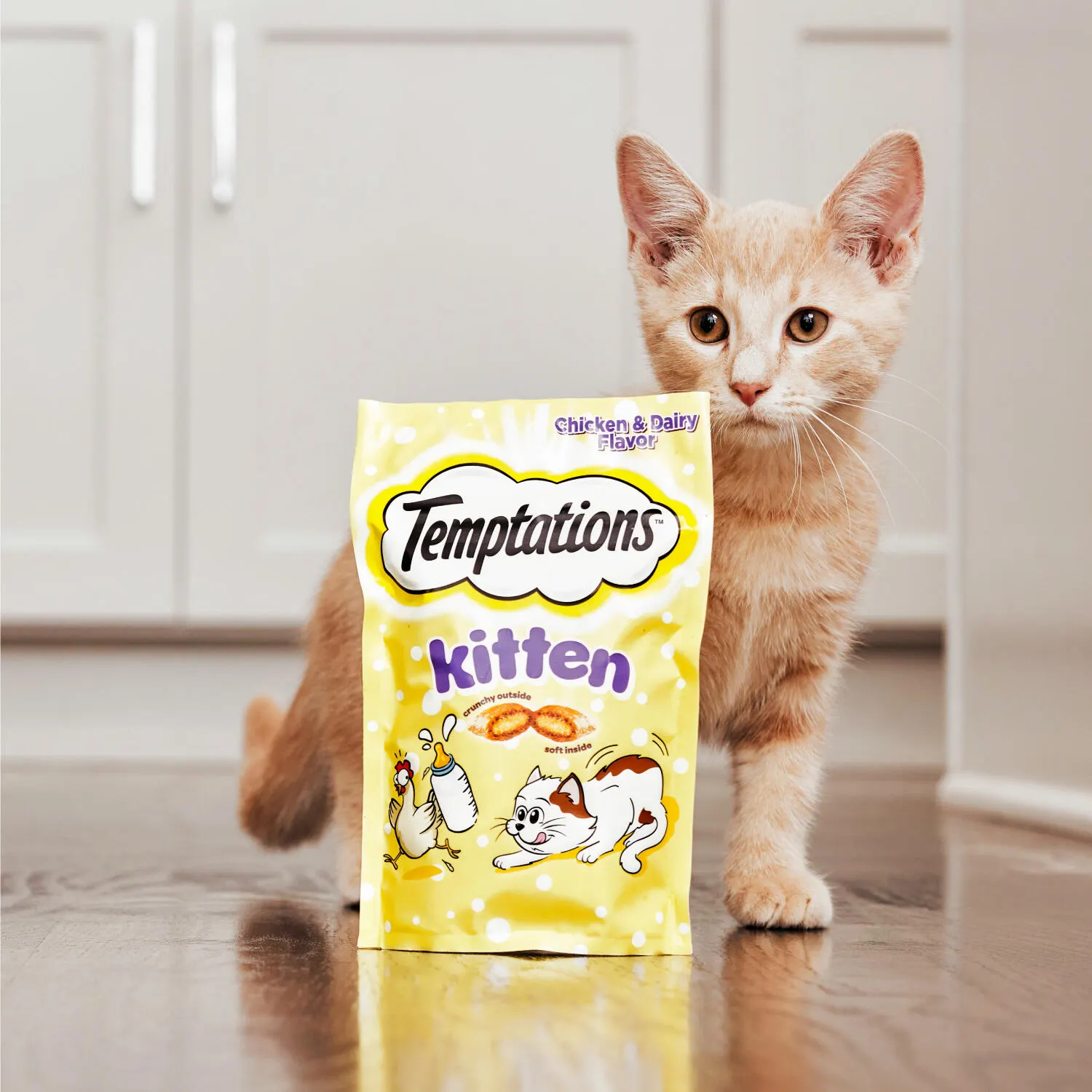
Finally, the earlier you start training your cat, the easier it will go. Cats thrive on routine, and if learning tricks has not been a regular part of their lives, training can be tough at first. So start when they’re a kitten.
That said, it’s better late than never!
Common Training Methods Comparison Chart
When you’re ready to train your cat, you have a few different methods to choose from. Once you decide on your training goals, you can choose the method that makes the most sense for your cat.
Goals are divided into three main categories: reinforcing natural behavior, teaching new tricks, or building toward advanced skills.
When deciding which method to use, consider your cat’s temperament and preferences. For instance, some cats like physical guidance, while others want to problem-solve on their own.
Don’t be afraid to combine or swap methods as your training evolves. Below are a few of these methods.
Method | How It Works | Best For | Key Tool |
Clicker Training | Marks correct behavior with a click, followed by a treat | Teaching tricks, shaping new behaviors | Clicker or verbal marker |
Lure Training | Uses a treat to guide the cat into position | Basic commands like sit or spin | Treat held in hand |
Target Training | Teaches cat to touch a stick or hand with nose or paw | Building foundation for complex tricks | Target stick or finger |
Capture Training | Rewards a behavior the cat offers naturally | Reinforcing existing behaviors | Treats only |
Adjustments for Senior Cats
If you’re training a senior cat, be mindful of their physical limits because senior cats have their own unique considerations.
For instance, if your older cat has arthritis, avoid asking them to jump. . Instead, focus on lower-impact behaviors like sitting, waving, or targeting (touching their nose or paw to your hand or a target stick).
But don’t count your senior cat out when it comes to training! Learning new tricks provides mental stimulation, which is good for their cognitive health as they age.
Make Training Time Treat Time with TEMPTATIONS™

When it comes to finding the just-right treats for your cat’s training sessions, TEMPTATIONS™ Classic Treats might just be your go-to! Crunchy on the outside and soft on the inside, these high-value treats will keep your cat motivated and eager to work.
TEMPTATIONS™ Classic Treats come in a stay-fresh pouch for spur-of-the-moment training sessions and are available in a variety of flavors including Tasty Chicken, Savory Salmon, and Hearty Beef. Want to up the game? Try TEMPTATIONS™ Wacky Blasts. Same crunchy outside and soft inside your cat already loves, blasted with extra flavor for even more irresistibility.
So lean into the long game. By rotating flavors, your cat will come back for more. More treats and more training!
Contributor
Jessa is an experienced animal trainer and behavior specialist with over 20 years working and learning with animals. Her background includes work with marine mammals (sea lions, seals, otters, dolphins, walruses) as well as cats an dogs. Throughout her career she has focused on cooperative care behaviors like voluntary blood draw and veterinary handling. She has Masters of Science in International Animal Welfare, Ethics and Law as well as a Human Animal Bond Certification. Along with her family cats and dogs, Jessa is a volunteer puppy raiser for Canine Companions, helping to train future service dogs.
References
- https://www.aaha.org/resources/2015-aaha-canine-and-feline-behavior-management-guidelines/(open in new tab)
- https://www.catster.com/cat-health-care/ways-to-train-your-kitten/(open in new tab)
- https://vcahospitals.com/pediatric/kitten/behavior-training/how-to-train-a-kitten(open in new tab)
- https://www.aaha.org/wp-content/uploads/globalassets/02-guidelines/feline-life-stage-2021/2021-aaha-aafp-feline-life-stage-guidelines.pdf(open in new tab)
- https://www.aspca.org/blog/four-reasons-give-senior-cats-lifesaving-chance(open in new tab)
- https://www.catster.com/cat-health-care/how-long-does-it-take-to-train-a-cat/(open in new tab)
Cats who love this may also like …
7 Ways to Use “The Shake” to Train Your Cat
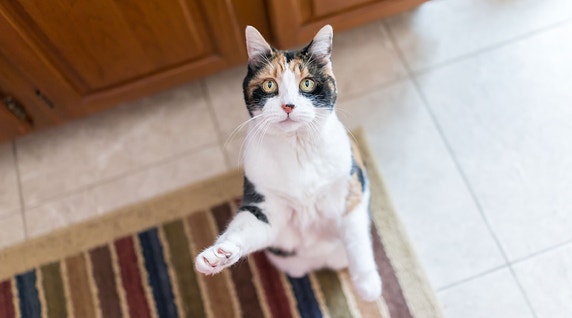
Want your cat to respond to your every desire? All it takes is a shake of the TEMPTATIONS™ treat bag. It’s true! Cats find “the shake” irresistible, and our delicious cat treats are (in our humble opinion) a superb way to reward your feline friend for a job well done. Use them to help train your cat to be a perfectly polite kitty.
READ MORE
Why Cats Love Catnip | What It Is and What It Does to Cats
Learn the nutritional reasons on why your furry friend can't get enough of catnip. Also, make sure to check out the other treats we have to offer.
READ MORE
Cat Q&A: Why Does My Cat Lick and Bite Me?
Learn about the reasons why your cat or kitten might be licking and biting you and how TEMPTATIONS™ cat treats can help!
READ MORE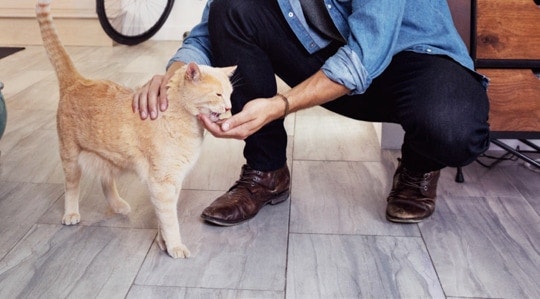
How Should You Use Cat Treats?
If you’re wondering whether you ought to buy your cat some treats, whether you’re using them correctly or just what they’re for in general, you’ve come to the right place. As the experts in irresistible things for cats, we can help you get the most out of those powerful pouches.
READ MORE