
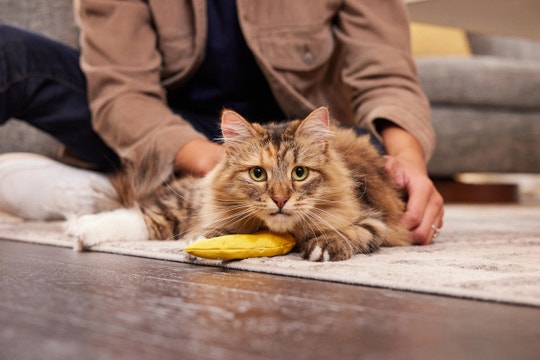
How To Play With Your Cat
Ready to learn how to play with your cat like a pro? Make your cat’s life better with a little pounce and a lot of wiggle!
To get those whiskers twitching and those paws swiping, try acting like a sneaky little mouse. Move your toys in a quick, zig-zag motion away from your feline friend to spark their inner hunter. Whether they’re a tiny kitten or a wise senior, they’re sure to love a good chase!
In this guide, you’ll discover the best ways to play with your cat. We’ll cover a wide range of toys and give you tips for kittens and senior cats, all designed to keep your feline mentally sharp and physically healthy.
So, grab some treats and their favorite toys, and get ready. It’s time to turn your living room into the ultimate cat playground!
Key Takeaways
- Mimic prey by moving toys in quick, unpredictable patterns away from your cat.
- Aim for two to three play sessions of 10 to 15 minutes each per day.
- Wand toys, feather teasers, and laser pointers (never shine in their eyes) trigger natural hunting behavior.
- Always end the play session by letting your cat catch a physical toy to complete the hunt cycle.
- Swap out toys every few days to maintain interest and prevent boredom.
Why Cats Need Daily Play
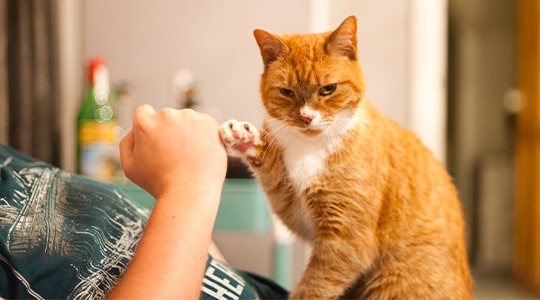
They may not look like it while they’re purring on your lap or lounging in the sun, but your cat is a tiny tiger in disguise! And, just like their wild relatives, they’re wired to hunt. Without this type of mental and physical stimulation, your cat can get cranky and gain unnecessary weight.
The good news? A bit of playtime with you is enough to satisfy their predatory instincts, reduce their stress levels, and maintain a healthy weight.
How to Play with Your Cat
Great play sessions follow a pattern your cat already knows by instinct. The key is recreating the full hunt cycle, from the first stalk to the final catch, so every session ends with satisfaction, not frustration.
Understanding the Hunt Cycle
Ever wonder why your cat stares at a dust bunny or “stalks” you while you’re making dinner? It’s because they’re following their natural behavior to engage in a hunt cycle (stare, stalk, chase, pounce, catch, and “kill”).
Even though you meet your feline friend's nutritional needs every day, they still feel that tug to pursue their prey now and then.
Sometimes, it’s a relatively tame experience, like pouncing on your feet under a blanket. Other times, like when they get the zoomies, it can be a bit more destructive.
Fortunately, the right kind of play recreates this cycle so that your cat gets it out of their system and feels satisfied at the end. Just make sure you don’t skip the catch phase. Doing so can cause your cat to become frustrated and develop behavioral issues.
Mimicking Prey Movements
To get your cat engaged in the hunt, always wiggle toys away from them. This makes sense when you think about it because real prey never runs toward the predator.
Use quick, jerky movements, pauses, and a mix of slow creeps with fast bursts of speed to mimic the behavior of their favorite prey.
Ending Play Sessions
The final phase of the hunt cycle is just as important as the chase. Always let your cat catch the toy at the end of each session and allow them to “kill bite” and kick the toy to complete the hunt.
After the play session, offer them a tasty treat (like TEMPTATIONS™ Blissful Catnip Flavor). This tells their brain that the hunt is over and that it’s time to rest and recover.
Best Toys for Interactive Play
Table of Contents
Wand and Feather Toys
Wand and feather toys keep your fingers safe while letting you mimic the movement of a fluttering bird or a scurrying mouse. Drag them across the floor to encourage your cat to pounce, or fly them through the air to get your cat to leap.
Just remember, feather toys are for supervised fun only. Keep them tucked away when you’re not using them, so your kitty doesn't wind up gnawing on the feathers (which can be a choking hazard).
Laser Pointers
Laser pointers are the perfect “toy” for a high-speed play session that really gets your cat’s heart pumping! You can quickly and easily maneuver the dot over, around, and under furniture, not to mention up the wall.
To avoid a frustrated feline, always end the game by landing the light on a real, fuzzy toy (like a kicker toy; see the next section). This lets your cat finally catch their prey so they feel satisfied with the hunt.
Ball and Chase Toys
Balls that roll or bounce unpredictably are perfect for a cat who loves a good chase.
Try tossing a lightweight ball or small stuffed animal across the room to entice your cat to play. Or slide the same toy along the floor to get the hunt started. Once they catch the toy, they may just return it to you to start the process all over again.
Kicker Toys
A kicker toy is a long tube stuffed with soft filling that allows your cat to grab on with their front paws and kick with their back legs (a big part of the final phase of the hunt cycle).
Look for one with a bit of catnip inside to make the wrestling match even more exciting and to burn off even more of your cat’s boundless energy!
Treats
We’ve already talked about using a small treat at the end of a play session after your cat has caught its prey. But you can also use treats as toys themselves!
Toss a dry treat across the room or hide it in a toy to motivate your cat to get involved. If you choose to use treats like this, stick to the low-calorie variety so you don’t overfeed your feline during playtime.
Puzzle Toys and Food Enrichment
Puzzle Type | Best For | How It Works |
Treat balls | Active cats | Roll to release kibble |
Maze boards | Pawing cats | Reach into compartments |
Slow feeders | Fast eaters | Navigate grooves to access food |
Snuffle mats | Scent driven cats | Hide treats in fabric folds |
Puzzle feeders turn mealtime into a stimulating game that mimics the real hunt cycle. These types of feeders allow you to insert a bit of food or a treat into the toy so your cat has to work to get their prey.
Puzzle feeders come in two main types: mobile and stationary. Mobile puzzles are great for cats who like to bat, push, and chase. Stationary puzzles, on the other hand, are for those who like to paw at their prey.
Whichever type you choose, start with an easy puzzle and increase the difficulty as your cat learns. It’s also a good idea to rotate puzzle types every few weeks to prevent your cat from getting bored.
Monitor your cat as they play. If you see signs of frustration, adjust the difficulty as needed.
How Often Should You Play with Your Cat?
The amount of dedicated play time your feline friend needs depends on their age and activity level.
They might need anywhere from two to five (or more!) play sessions of 10 to 15 minutes each per day. Keep in mind that short bursts of activity are more effective than one long hunt because cats lose interest pretty quickly.
It’s also good to remember that cats are naturally crepuscular, which means they’re most active at dawn and dusk (incidentally, this is the most common time for the zoomies).
Try engaging in playtime first thing in the morning before breakfast and again at night before bed. This can help them expend their energy so they’re less active while you’re at work or sleeping!
Play by Life Stage
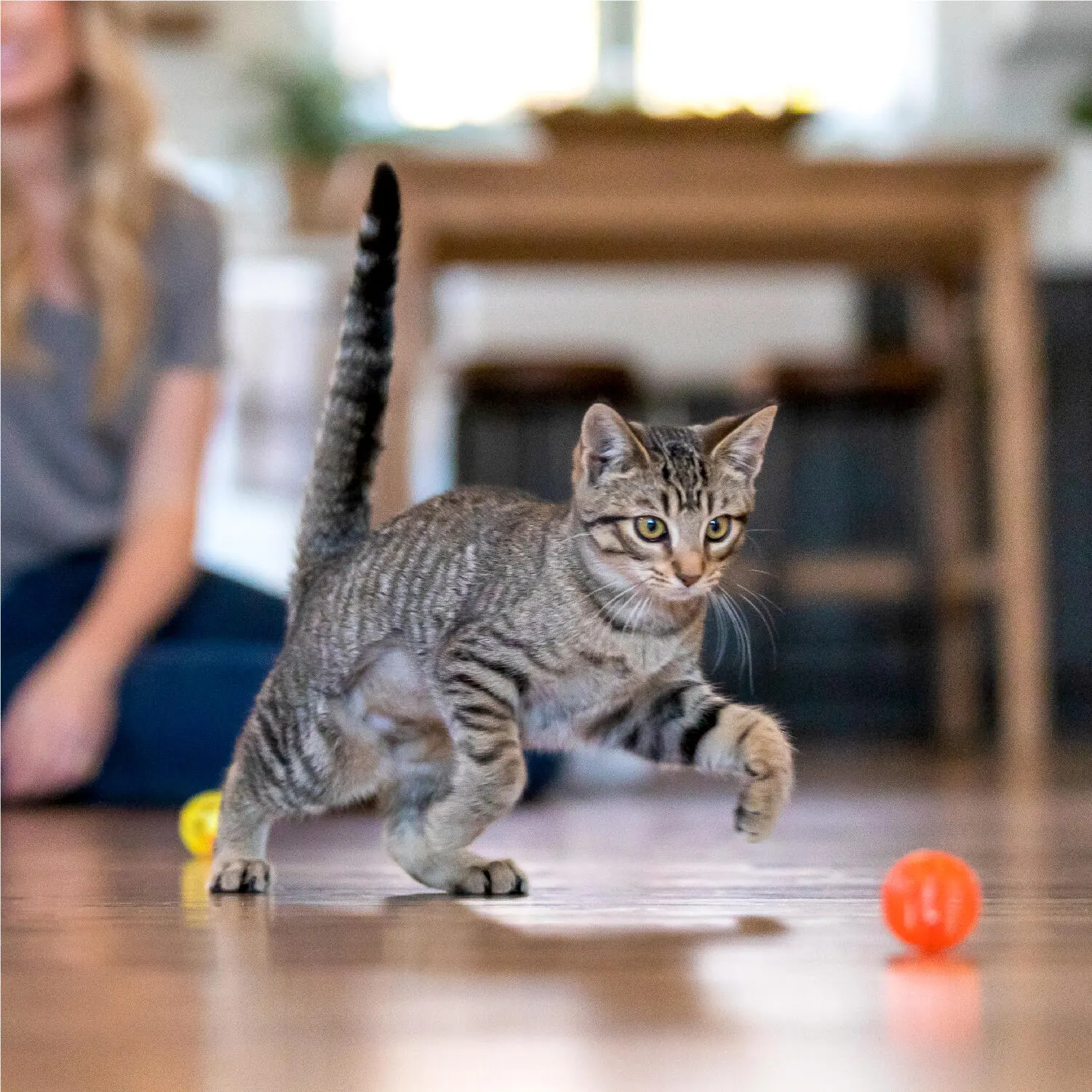
Kittens
Kittens have much higher energy than adults and seniors, so they may need five or more short play sessions every day. When you engage with your kitten, always use a toy, never your fingers or toes, as they may start to think that your digits are their chew toys!
It’s also good for your kitten to socialize with other kittens (or even adult cats). Doing so builds the confidence and social skills they need to get along with others when they get older.
Adult Cats
For adult cats, set a goal to play with them two or three times a day for 10 to 15 minutes each.
Each cat has a preferred hunting strategy. One may enjoy stalking prey on the ground, while another may enjoy swatting at prey through the air. Do your best to identify their preference and mimic that play style in the majority of games.
Regular play also has the added benefit of helping your adult cat stay sleek, lean, and healthy!
Senior Cats
While senior cats aren’t as energetic as kittens or adult cats, they still love to play, albeit for shorter amounts of time.
Aim for three to four play sessions of 5 to 10 minutes each every day, and keep things more low-key. Use toys that require less jumping and running, and keep the play in tighter quarters instead of ranging all over the room.
Watch for signs of fatigue or discomfort, and end sessions early if your senior cat seems to be getting tired or annoyed.
Other Ways to Enrich Your Cat's Environment
Window Watching
Does your cat enjoy sitting on the windowsill and watching “Squirrel TV” (or “Bird TV”)? We’re not surprised! Doing so provides lots of mental stimulation for your cat and can serve as the very early stages of the hunt cycle.
You can make it easier for your kitty to get involved by setting up a perch or cat tree near a window with a view and hanging bird feeders in their eyeline.
Climbing and Perching
Along with their instinct to hunt, your cat also has an instinct to climb and observe things from upon high.
Satisfy this need with tall cat trees or wall shelves that your feline can access. These spots help your kitty feel safe, confident, and like they’re doing what they were born to do: rule their castle!
Hide and Seek
Make time in your busy schedule for a game of hide and seek, obstacle course, or scavenger hunt.
Hide a few tasty treats around the house to encourage your cat’s tracking skills. Place the treats in empty cardboard boxes or paper bags (never plastic!) to stimulate your cat’s need to explore.
Keep things fresh by switching up the hiding spots every few days to keep the activity interesting.
Reward the Hunt with TEMPTATIONS™ Treats
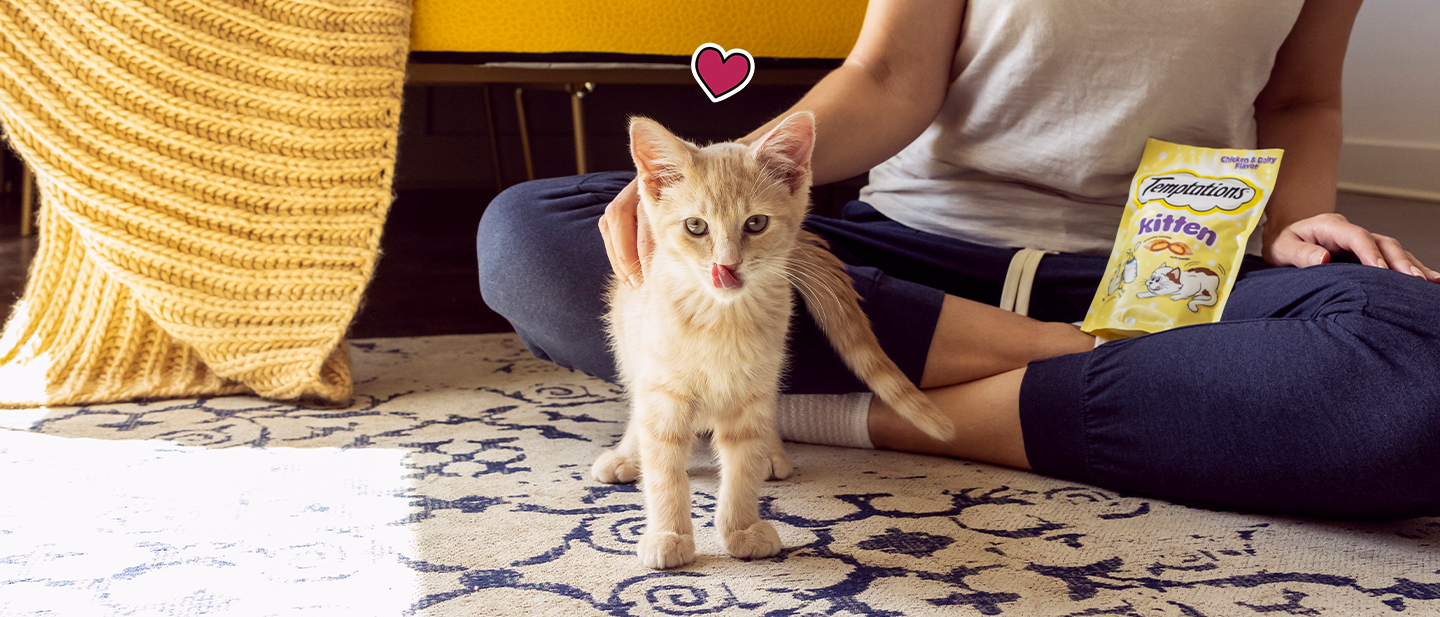
Every great hunt deserves a big finale! Finish your play sessions with a delicious treat to satisfy your cat’s inner tiger.
TEMPTATIONS™ treats are under 2 calories each and have an irresistible crunch and creamy center that cats crave. They’re great for puzzle feeders that combine play, mental enrichment, and a reward at the end, and are ideal for clicker training and teaching tricks.
Explore all of TEMPTATIONS™ Cat Treats to find your feline friend’s new favorite!
References
- https://vcahospitals.com/know-your-pet/cat-behavior-and-training---enrichment-for-indoor-cats
- https://www.aaha.org/resources/how-often-should-you-play-with-your-cat/
- https://vcahospitals.com/know-your-pet/feeding-the-mind-and-body-interactive-feeders-for-dogs-and-cats
- https://pmc.ncbi.nlm.nih.gov/articles/PMC11148901/
- https://icatcare.org/articles/puzzle-feeders-for-your-cat
- https://link.springer.com/article/10.1186/s12917-017-0987-6
- https://www.sfspca.org/resource/playing-with-your-cat/
- https://icatcare.org/articles/playing-with-your-cat